In partnership with

We're proud to have AMASS as today's lead sponsor of Token Metrics, supporting our mission to deliver cutting edge insights and connect the investment community.
Rosé Can Have More Sugar Than Donuts?

No wonder 38% of adults prefer health-conscious beverages. AMASS Brands is raking in sales by tapping into this trend. They’ve earned $80M+, including 1,000% year-over-year
growth, thanks to products like their top-selling zero-sugar rosé. They even reserved the Nasdaq ticker $AMSS. Join celebs like Adam Levine and Derek Jeter as an AMASS investor and get up to 23% bonus shares today.
This is a paid advertisement for AMASS’s Regulation CF offering. Please read the offering circular at https://invest.amassbrands.com
Market Snapshot
Welcome back, Token Metrics readers.
As of Nov 29, 2025, the crypto market is in a cautiously constructive posture coming out of the U.S. Thanksgiving period. Majors like Bitcoin and Ethereum are trading in relatively tight ranges with a modest positive bias, while select altcoins such as HBAR show stronger moves on narrative- and flow driven catalysts.
Regulatory clarity is advancing in key jurisdictions like the UK, and exchanges continue expanding fiat on ramps and regional listing campaigns, suggesting structural building underneath still subdued venture funding conditions.
1. UK Finalizes Sweeping Crypto Transaction Reporting Rules Effective 2026

The UK has locked in a major change to how crypto activity will be reported and taxed. Starting in 2026, all UK based crypto platforms will be required to report comprehensive user transaction data directly to His Majesty's Revenue and Customs (HMRC).
The move extends the OECD's Cryptoasset Reporting Framework (CARF) to cover domestic activity, not just cross border flows. In practice, KYC'd UK users should assume that their exchange and broker histories will be automatically shared with HMRC, significantly reducing the scope for under reported gains or losses. Recent coverage of the policy update highlights the focus on standardized global reporting.

A key component is the 'no gain, no loss' treatment for many DeFi interactions. Rather than triggering a taxable event at every swap, collateral move, or LP token transfer, HMRC will generally recognize gains or losses only when a user ultimately disposes of their tokens. For active DeFi traders and LPs, this dramatically reduces the record keeping burden while still allowing HMRC to tax outcomes at exit.
Over the medium term, stricter reporting may push some volume toward offshore venues or non custodial DEXs, especially for traders who highly value privacy. At the same time, clear rules and alignment with international standards can make the UK more attractive for institutions whose compliance teams need predictable frameworks.
What it means for investors: If you have UK exposure, assume all tax sensitive activity on KYC'd platforms will be fully visible from 2026 onward. Tighten your own record keeping now, review how you use DeFi versus centralized platforms, and expect other major jurisdictions to move in a similar direction as CARF adoption spreads.
2. GaiAI $GAIX Airdrop Claims Go Live Alongside Binance Listing on Nov 29

GaiAI, a decentralized AI project focused on creator and developer tooling, is stepping into a major catalyst window today. Its GAIX token is listing on Binance's Alpha platform on Nov 29, with eligible users able to claim airdropped tokens via the Alpha Points interface once trading opens. The launch effectively turns prior Alpha Points participation into token exposure at TGE, following a model that has become increasingly common for exchange hosted launches. You can find more detail on the launch mechanics in the project's recent launch overview.
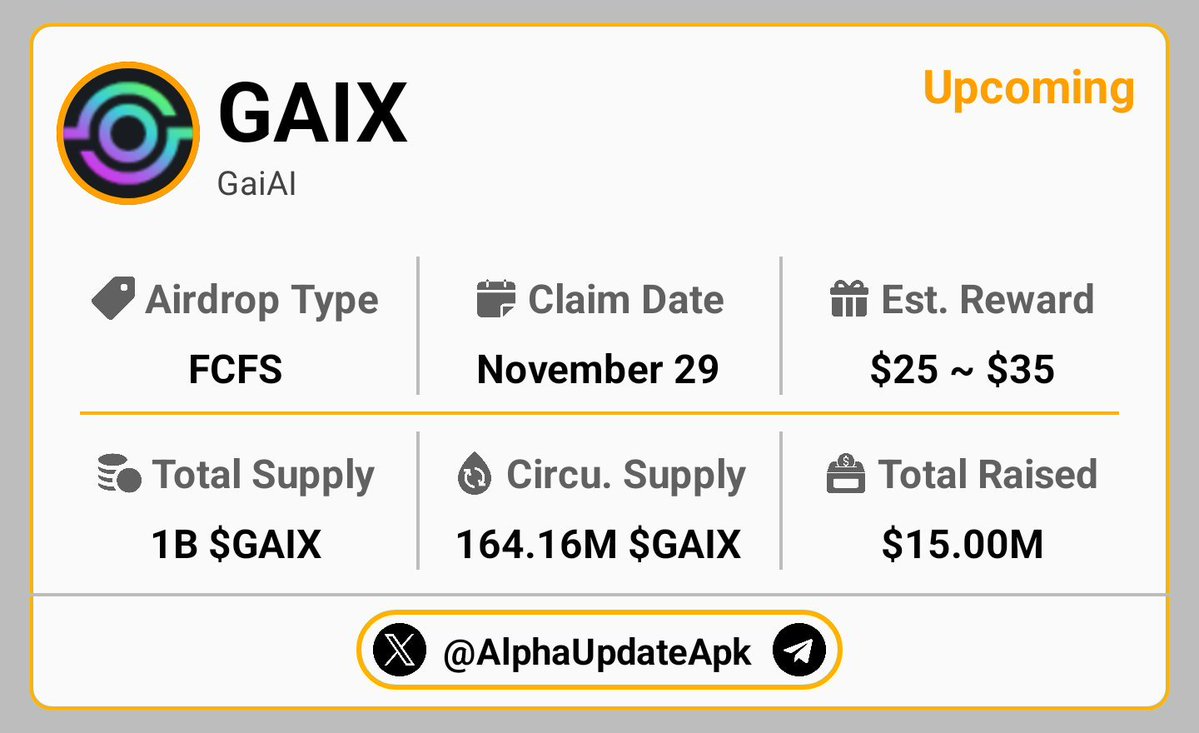
The GaiAI narrative sits at the intersection of two of 2025's dominant themes: decentralized AI infrastructure and exchange aligned airdrops. Social chatter, how to-claim guides, and eligibility threads have all ramped up into the listing, underlining strong retail interest.
Near term, the key decision for airdrop recipients is whether to hold GAIX for potential AI narrative upside or rotate quickly during listing volatility. Historically, exchange backed TGE events can see sharp initial moves in both directions as early claimants realize gains and new buyers chase the story.
Actionable angles: (1) If you are eligible, confirm claim steps and security practices before interacting with any airdrop links. (2) For traders, monitoring on chain flows from distribution wallets can help distinguish long term holders from fast flippers. (3) GAIX's day one performance could shape short term sentiment for other AI tokens waiting on listings or airdrops tied to centralized exchanges.
Today's Token Metrics insights are brought to you in partnership with Finance Buzz.
Put Interest On Ice Until 2027

Pay no interest until 2027 with some of the best hand-picked credit cards this year. They are perfect for anyone looking to pay down their debt, and not add to it!
Click here to see what all of the hype is about.
3. HBAR Rallies on Institutional Inflows and Derivatives Positioning Into Nov 29

Hedera's HBAR is extending a post Thanksgiving move that is outperforming much of the market. Heading into the Nov 29 session, HBAR is trading near $0.149 after a ~2.5% gain, continuing a broader upswing that has attracted attention from both derivatives traders and institutional desks. Recent market commentary points to a mix of spot inflows and structured products as drivers.
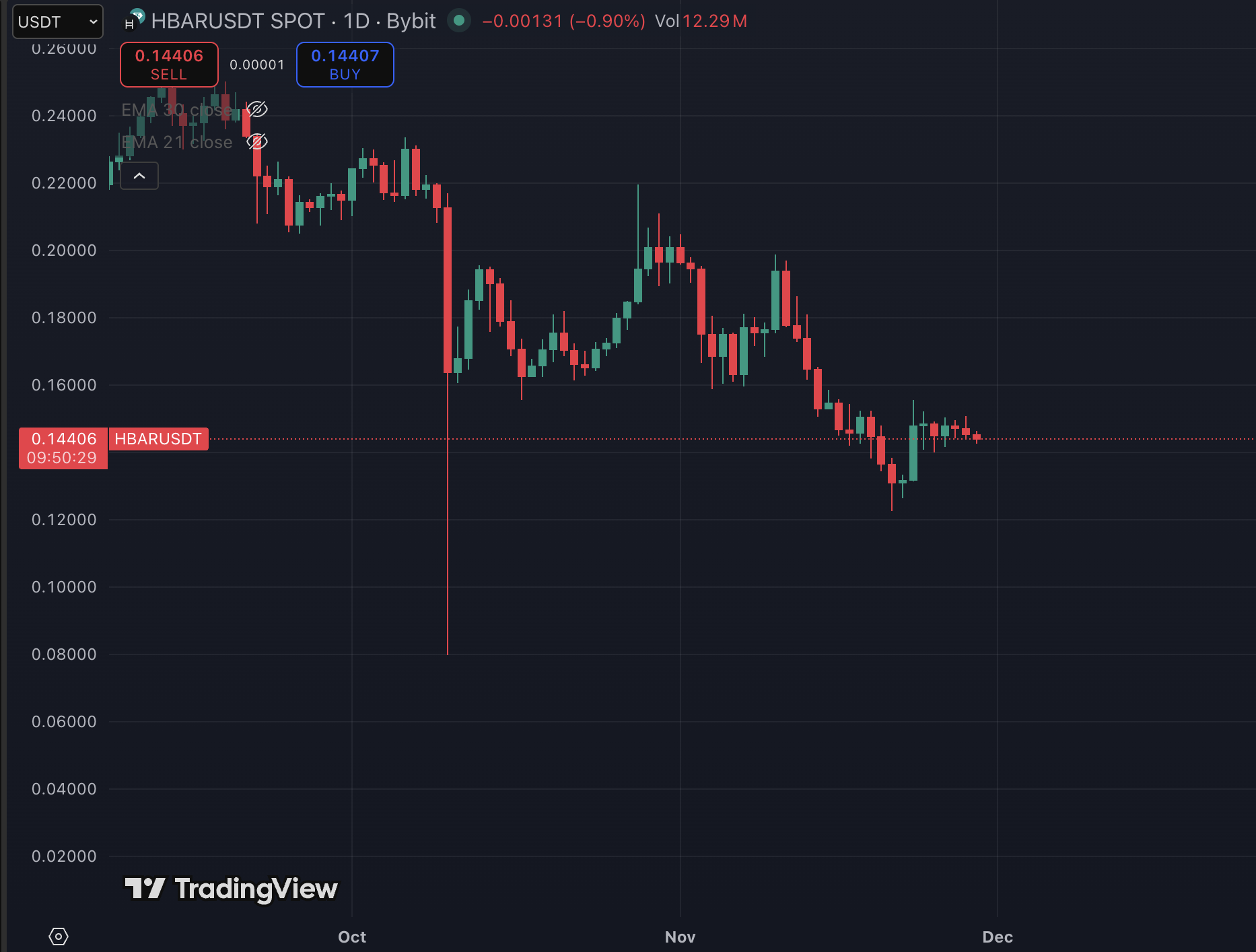
Derivatives metrics appear to confirm growing optimism. Funding rates and options skew have turned more positive, suggesting traders are willing to pay to stay long HBAR instead of simply fading strength. If this persists, it can incentivize delta neutral strategies that buy spot and hedge via perps, indirectly strengthening spot demand.
Hedera's focus on enterprise grade use cases and real world asset tokenization means that even modest institutional flows can have an outsized narrative effect. Any new corporate pilots, tokenization partnerships, or custodian disclosures around HBAR exposure would likely reinforce the story.
What to monitor: track changes in active addresses, transaction volumes, and TVL on Hedera based DeFi, alongside shifts in open interest and funding rates. If on chain activity and institutional signaling keep improving while broader market conditions hold, HBAR's current move could evolve from a short holiday burst into a more durable trend.
4. Crypto VC Remains Subdued, But Selective Capital Deployment Is Shaping the Next Cycle
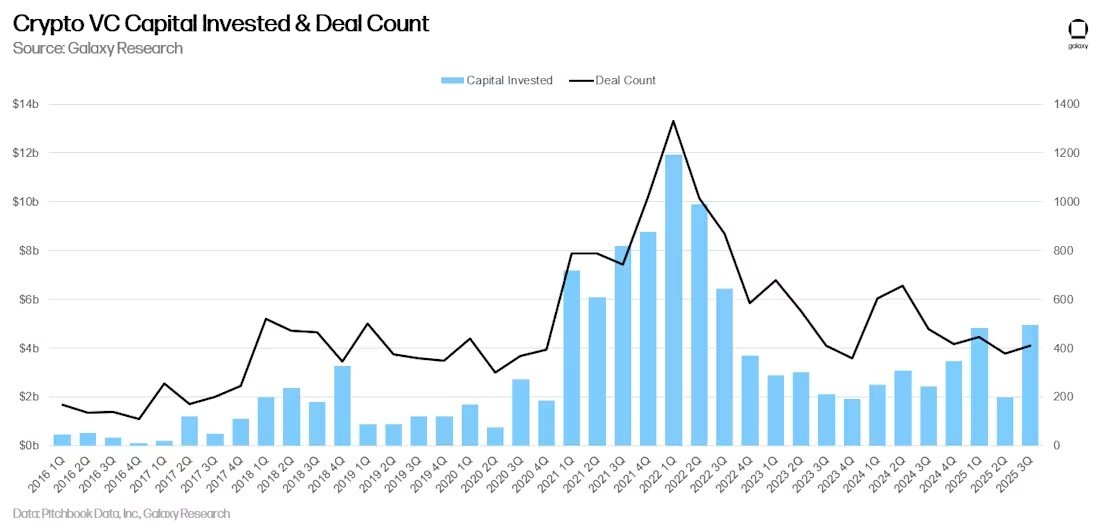
Despite improving token prices, crypto venture funding is still in a multi year slump. A recent analysis of the largest rounds over the past few months shows only a small set of projects pulling in raises north of $50M, with capital concentrating in a few key verticals: base layer infrastructure (L1s/L2s, data availability, rollup tooling), real world asset tokenization, and AI adjacent crypto plays. A breakdown of these deals in recent VC funding coverage underscores how selective investors have become.
Speculative consumer tokens and meme driven projects are seeing far less appetite than in prior cycles. Check sizes and valuations are more disciplined, and investors increasingly demand clear revenue paths, regulatory awareness, and credible business models before committing serious capital.
For founders, that means traction and unit economics matter again. For liquid token traders, the mix of funded narratives is a useful leading indicator: the projects securing scarce VC dollars today are potential mid cap leaders once their tokens list or unlock down the line.
Implications for the current market: muted primary issuance and fewer new IDOs reduce immediate sell pressure and narrative noise, which can be supportive for existing high quality assets. Over a longer horizon, though, if under investment persists into 2026, it could slow the pace of innovation and limit the breadth of the next bull cycle.
Outlook
The current setup looks like a late bear, early bull transition: majors are consolidating, while targeted narratives such as AI crypto, enterprise grade chains, and DeFi infrastructure see bursts of speculative and institutional interest.
On the structural side, the UK's 2026 reporting regime and DeFi friendly 'no gain, no loss' treatment signal a maturing regulatory approach that other jurisdictions may emulate. At the exchange layer, aggressive expansion into emerging markets—illustrated by Binance's recent wave of IDR spot listings and bot support—continues to deepen liquidity and on ramp new users.
Token economics remain front and center. Hyperliquid's $351M HYPE unlock, offset by more than $600M in prior buybacks, is a live case study in how proactive treasury management can reshape the impact of large unlocks. Expect more teams to experiment with similar approaches as they navigate cliffs and vesting schedules.
Looking into Q4 2025 and beyond, keep an eye on three big picture drivers: (1) how quickly regulatory clarity spreads from markets like the UK into the EU, U.S., and Asia; (2) whether AI and real world asset narratives convert from hype into sustainable fee generating protocols; and (3) any inflection in crypto VC deal volumes and round sizes that would signal deeper conviction in the next cycle.
As always, position sizing, time horizon, and risk tolerance matter more than any single headline. This newsletter is for informational purposes only and is not financial advice.
Token Metrics is sponsored by AltIndex.
Like Moneyball for Stocks

The data that actually moves markets:
Congressional Trades: Pelosi up 178% on TEM options
Reddit Sentiment: 3,968% increase in DOOR mentions before 530% in gains
Plus hiring data, web traffic, and employee outlook
While you analyze earnings reports, professionals track alternative data.
What if you had access to all of it?
Every week, AltIndex’s AI model factors millions of alt data points into its stock picks.
We’ve teamed up with them to give our readers free access for a limited time.
The next big winner is already moving.
Past performance does not guarantee future results. Investing involves risk including possible loss of principal.